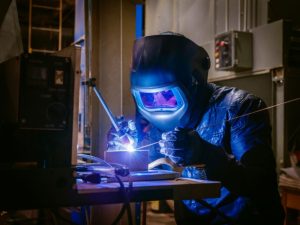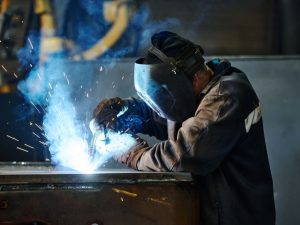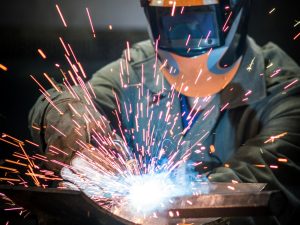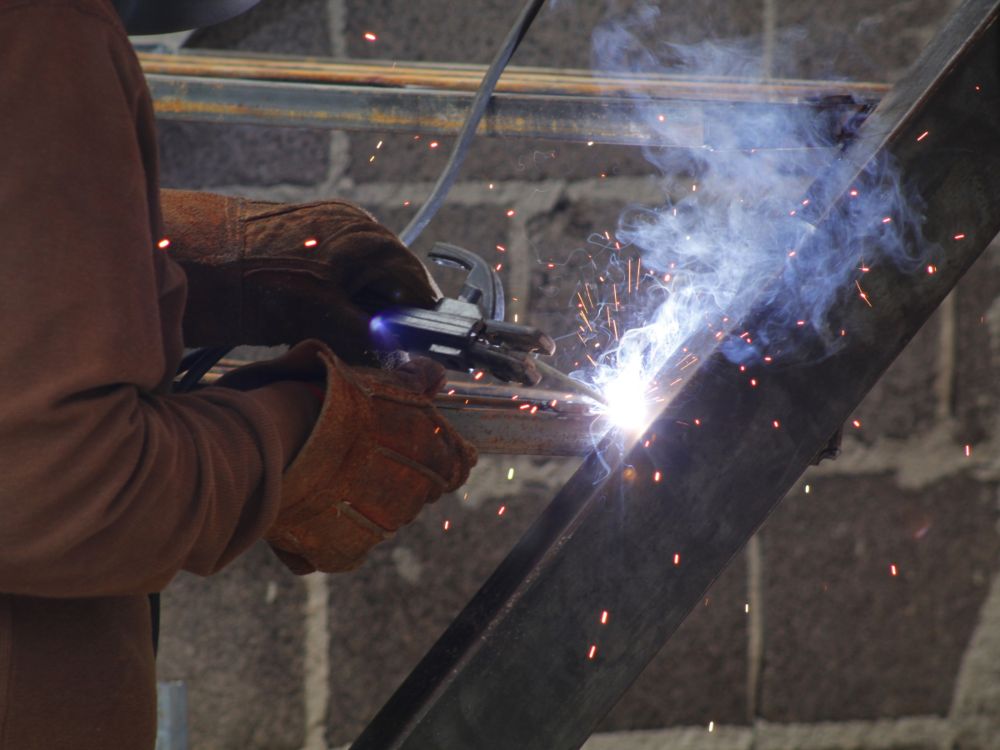
In a research or prototype shop, air quality starts with an alloy check before each new job and a capture point that stays close to the arc without disturbing the shielding gas. This post is for lab managers, engineers, and EHS leads who weld small batches and one-off parts, often with TIG, in materials that change from one project to the next.
It covers changeover, capture, and how extraction fits with cleanliness. For the equipment side, see KEMPER’s fume extraction solutions for research, prototyping, and high-tech manufacturing.
Why Does the Alloy Matter More Than the Volume?
Small batches make little fume compared with a production line, but the fume can carry more risk per weld. OSHA’s fume fact sheet says fume output depends on the welding process, the base and filler metals, and the rod composition.
CCOHS lists where the main hazards come from:
- Nickel: stainless steel, Inconel, Monel, and Hastelloy.
- Chromium: most stainless and high-alloy materials. It converts to hexavalent chromium during welding.
- Beryllium: a hardening agent in some copper, magnesium, and aluminum alloys. CCOHS identifies it as a carcinogen.
In the United States, 29 CFR 1910.252(c)(8) calls for local exhaust and airline respirators on beryllium work unless worst-case atmospheric tests show exposure within the limits.
OSHA regulates hexavalent chromium under its own standard, 29 CFR 1910.1026. For the health effects behind these metals, see Health Risks of Welding Fumes.
How Do You Build an Alloy Changeover Routine?
Before each new material, run this routine:
- Read the safety data sheet for the base metal, the filler, and any cleaning solvent.
- Write the alloy, the process, and the capture setup in a bench log.
- Send any alloy with a specific rule, such as beryllium, lead, or cadmium, to your EHS lead before the first arc.
CCOHS recommends risk assessments and occupational hygiene air sampling to identify exposures. A particle monitor can show when dust rises, but it cannot tell you which metals are in the air. When an alloy raises a question, ask a qualified person to sample.
How Close Can the Capture Point Sit on TIG Work?
Close enough to take the plume and far enough to leave the shield alone. Neither OSHA nor CCOHS names a distance specific to TIG, and OSHA says only to keep nozzles close to the plume source.
ANSI Z49.1 gives about 100 feet per minute at the work zone as a recommended ceiling for avoiding a disturbed arc. It also states that the figure says nothing about whether contaminant control is adequate.
So, find your distance on scrap:
- Weld a test coupon with the extractor running at the planned setup.
- Check the bead for porosity.
- Move the nozzle in or out and repeat.
- Log the distance that works for that alloy and joint.
KEMPER’s high-vacuum extraction category lists torch-integrated, slot, and funnel nozzle setups. Those give you different ways to place the capture point.
Does Fume Extraction Help Keep the Work Clean?
It helps with one source of contamination, not all of them. Capturing fume near the arc leaves less of it in the room air to settle on benches, instruments, and parts. KEMPER’s pages for research and aerospace work describe extraction as a way to protect sensitive components from contamination.
A filter unit does not clean parts, manage shielding gas, or turn a shop into a controlled environment. If a process has a cleanliness requirement, ask your quality team what it demands and test the extraction setup against it.
If you manage a lab or prototype shop that welds mixed alloys, write down the alloys and processes you run most. Then talk to KEMPER about which high-vacuum setup fits them.