Managing workplace hazards requires more than reacting to problems as they arise. Many manufacturers use the Hierarchy of Controls, a widely recognized occupational health and safety framework, to reduce risks before workers are exposed.
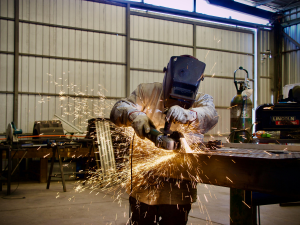
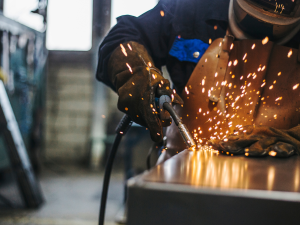
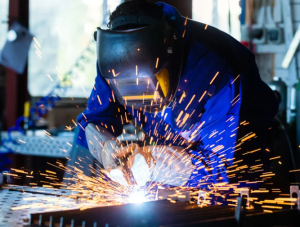
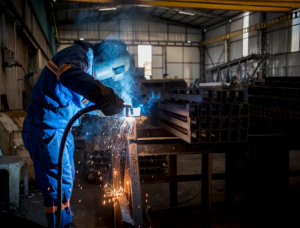
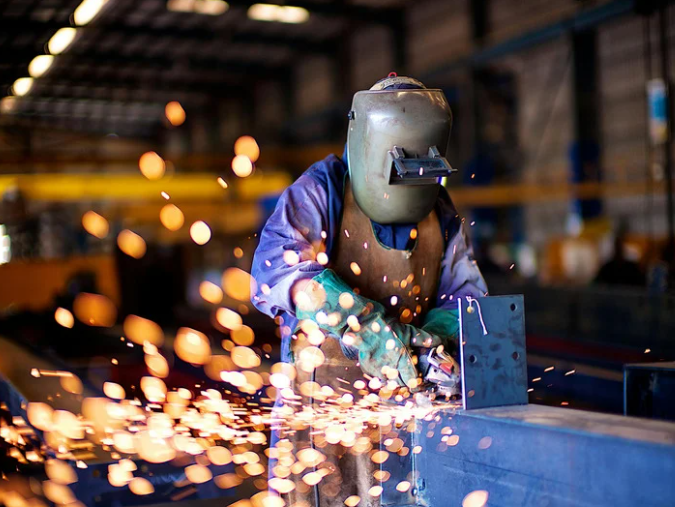
For welding operations, the Hierarchy of Controls provides a practical way to evaluate how hazards are managed, including airborne contaminants generated during welding, cutting, and grinding. Understanding where welding fume extraction systems fit within this framework can help organizations build stronger workplace safety programs.
What Is the Hierarchy of Controls?
The Hierarchy of Controls ranks hazard control methods from the most effective to the least effective:
- Elimination
- Substitution
- Engineering controls
- Administrative controls
- Personal protective equipment (PPE)
The principle is simple: whenever possible, control the hazard itself rather than relying solely on workers to avoid exposure.
While every level has a role to play, organizations are encouraged to prioritize higher-level controls whenever they are practical.
How the Hierarchy Applies to Welding
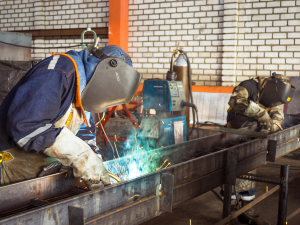
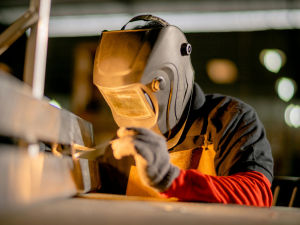
Some workplace hazards can be eliminated entirely, but welding is often an essential part of manufacturing, fabrication, and repair operations. Likewise, changing materials or welding processes isn’t always possible due to production requirements or customer specifications.
In these situations, employers often focus on engineering and administrative controls alongside appropriate PPE to reduce worker exposure.
This layered approach helps create safer workplaces without disrupting production.
Why Engineering Controls Are Prioritized
Engineering controls reduce risk by changing the work environment rather than relying on individual behaviour. In welding applications, this typically means capturing or removing airborne contaminants before they spread throughout the facility.
Depending on the application, facilities may incorporate:
- stationary extraction systems for dedicated welding stations
- mobile filter units for maintenance work and flexible workspaces
- central extraction systems for facilities with multiple welding stations
- general ventilation systems to improve overall indoor air quality
The right solution depends on factors such as facility layout, production volume, welding processes, and the number of active workstations.
Engineering Controls Support Long-Term Risk Reduction
Unlike administrative controls or PPE, engineering controls become part of the workplace itself. Once properly designed and implemented, they help reduce airborne contaminants regardless of who is performing the work or how frequently welding takes place.
For facilities with routine welding operations, effective engineering controls can also contribute to:
- More consistent workplace air quality
- Reduced accumulation of airborne particulate on equipment and surrounding work areas
- Improved visibility in active welding areas
- Cleaner production environments
- Better support for workplace health and safety initiatives
By addressing hazards closer to their source, organizations can create more reliable and consistent protection across the facility.
Using the Hierarchy of Controls to Evaluate Your Facility
The Hierarchy of Controls is more than a safety model—it’s a framework for continuous improvement. As production changes, new equipment is introduced, or facility layouts evolve, organizations should regularly evaluate whether existing controls continue to meet operational needs.
Questions to consider include:
- Are welding fumes being captured as close to the source as possible?
- Have new materials or welding processes introduced additional airborne hazards?
- Does the current ventilation strategy reflect today’s production demands?
- Are extraction systems properly maintained and positioned?
- Are employee training and safety procedures reviewed regularly?
Regular assessments help facilities identify opportunities to strengthen workplace safety while supporting cleaner air, improved productivity, and long-term operational performance.
To learn more about KEMPER’s complete range of welding fume extraction and industrial air filtration solutions, explore our product lineup or contact our team to discuss your application.