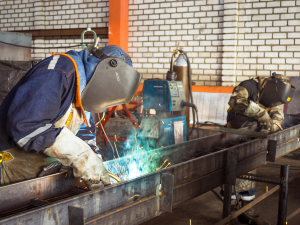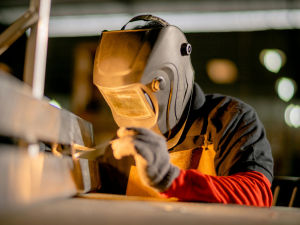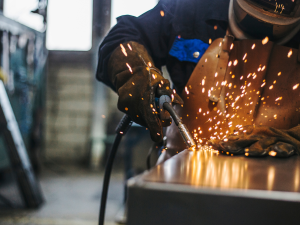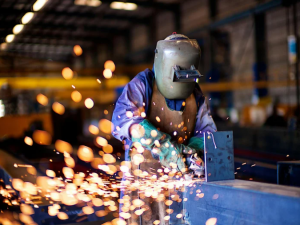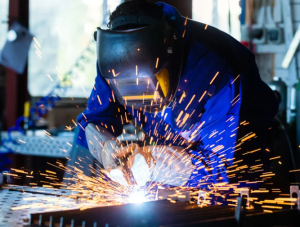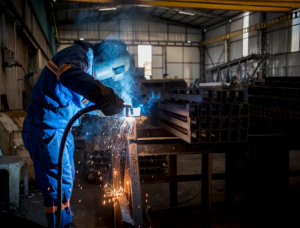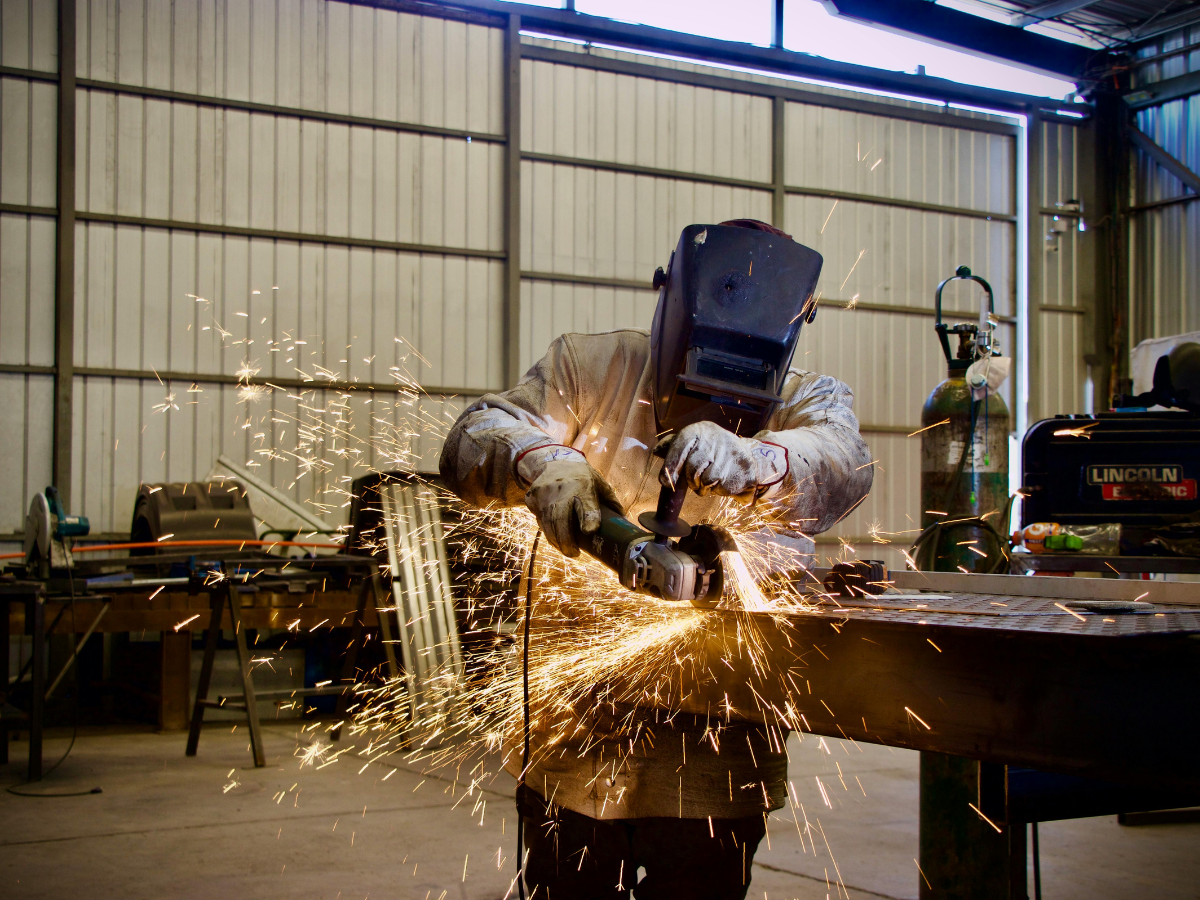
A welding table puts the work directly in front of a welder. This also means fumes rise close to the welder’s breathing zone.
You might be setting up a single bench in a small shop, a table in a training environment, or a dedicated cell on a larger floor. In each case, how you position extraction at the table affects how much fume gets pulled away and how much reaches the welder.
This is not about one specific product. It is about setting up any welding table so your extraction equipment, current or new, does its job.
Why Extraction Point Placement Matters
Local exhaust ventilation works best close to the source of the fumes. Its effectiveness drops quickly with distance.
At a welding table, keep the extraction arm, hood, or nozzle as close to the arc as the work allows. A capture point set too far back, or aimed the wrong way, lets fumes escape into the shop. This happens even if the extraction unit runs properly.
Choosing an Extraction Type for a Single Table
For a single bench or table, high-vacuum extraction with a torch-integrated connection, nozzle, or compact hood gives the most direct capture at the work. KEMPER’s VarioHood modular extraction hood is one option for hood-based capture at a fixed table.
Mobile filter units suit a table or bench that moves, including tables in training environments where setups change between sessions. If the table is a permanent fixture, a stationary extraction system can serve that location on an ongoing basis.
Setting Up the Table and Extraction Together
- Position the extraction arm or hood to reach the full work area. The welder should not need to readjust it mid-weld.
- Route hoses and cabling, so they do not restrict movement or catch on the table or workpiece.
- Keep the table clear of drafts from open doors, fans, or HVAC vents. Drafts can pull fumes away before the extraction point captures them.
- Leave enough clearance around the extraction unit for filter access and routine maintenance.
Where General Ventilation Fits In
Source capture at the table handles fumes from welding, but it is not the only layer to consider. A general ventilation system can help manage background air quality in the surrounding shop. This matters if the table sits in an open area near other workstations.
A Quick Maintenance Checklist for the Table Setup
- Check that the extraction arm or hood moves freely and holds its position during welding.
- Inspect hoses and connections for damage or blockages.
- Follow the manufacturer’s filter inspection and replacement schedule.
- Confirm airflow at the capture point on a regular basis. Check again after you move the table or extraction unit.
Getting the table setup right is as much about positioning and workflow as it is about the extraction unit. If you are outfitting a new table or training station, KEMPER North America’s team can help you match an extraction type to your setup.