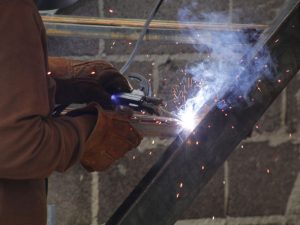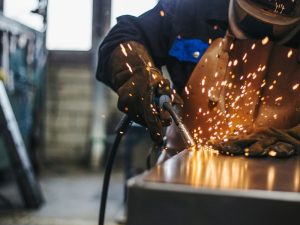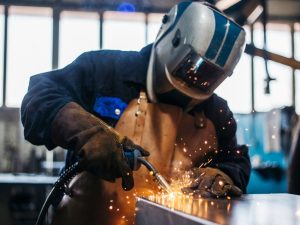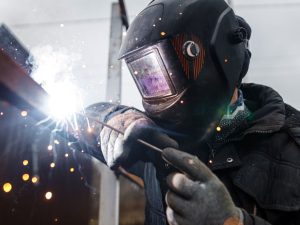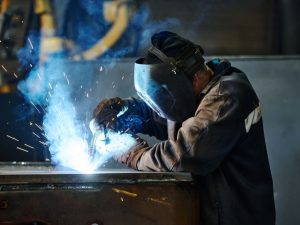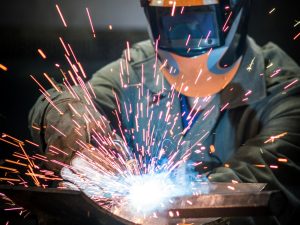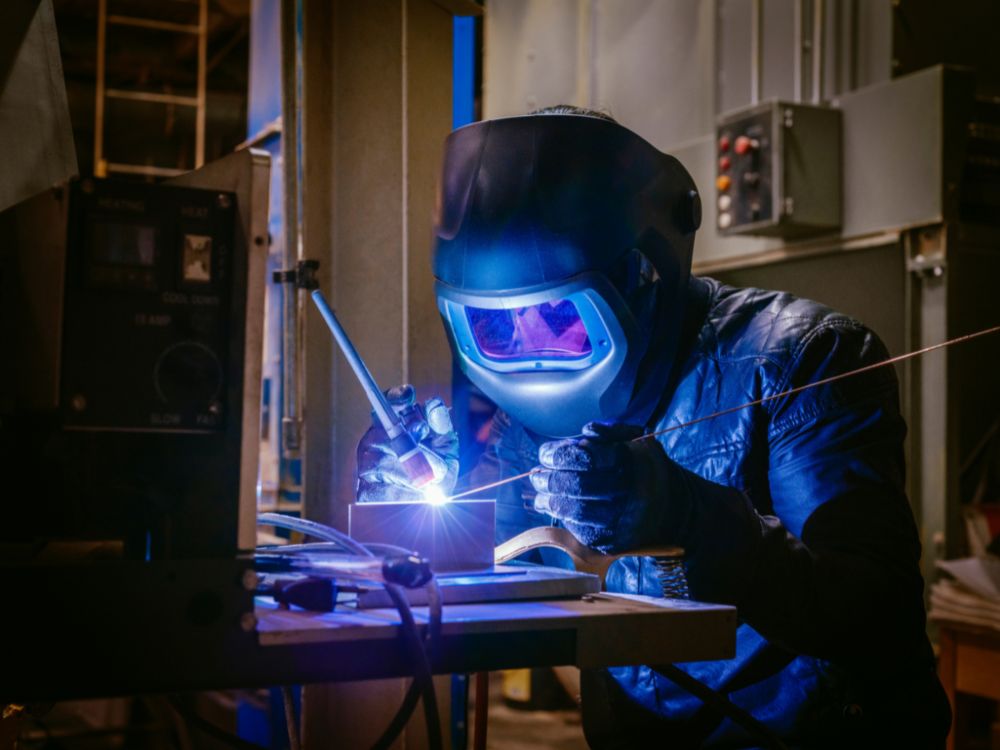
On field welds and heavy sections, control fume by bringing portable extraction to the joint and planning for wind, access, and coated steel before the welders arrive. This post is for fabrication managers and field supervisors who weld girders, bridge segments, and utility structures in the shop and on site, where building a booth around the work is not an option.
It covers what changes outdoors, the U.S. standard that applies, and how to place equipment on a large structure. For the equipment side, see KEMPER’s fume extraction solutions for infrastructure and civil engineering fabrication.
Why Is Welding Ventilation Different for Infrastructure Fabrication?
The work does not come to the welder. A girder, pier segment, or pipe spool stays where it sits, and the welder moves along it. Heavy sections often need multiple passes on thick joints, and one welder may stay at a single joint for long stretches. Fixed hoods and booths suit parts that move. They do not reach a splice on an elevated platform.
Outdoors changes the picture too. OSHA’s fume fact sheet says welding outdoors or in open spaces does not guarantee adequate ventilation, and it tells welders to stay upwind of the fume. Wind can carry fume away from the welder. It can also push the plume off a capture nozzle.
Which OSHA Standard Covers Shop Work and Field Work?
In the United States, OSHA splits welding ventilation by sector. 29 CFR 1910.252(c) covers general industry, including most fabrication shops, and 29 CFR 1926.353 covers construction work. A bridge segment built in the shop and then erected in the field can fall under both. Confirm the standard for each location with your safety professional.
Neither one assumes a booth. Under 1926.353, employers can use general mechanical ventilation, local exhaust, or both, and local exhaust uses movable hoods placed close to the work.
Coatings need a question before the first arc. Under 1926.353(c):
- Lead coatings and cadmium-bearing materials call for ventilation or airline respirators.
- Open-air work with those materials requires filter-type respirators, with airline respirators for beryllium.
Ask what is on existing steel before you cut or weld it.
In Canada, provincial and territorial regulators set the rules, and CCOHS points to CSA W117.2 and ANSI Z49.1 for ventilation guidance.
How Do You Place Portable Extraction on a Large Structure?
Plan the unit’s position one joint at a time. Before each move, ask where the welders will stand, how far the hose or arm reaches from the unit to the joint, and how the unit gets there. A cart that rolls across the shop floor may need to be lifted or carried on site, so check the route as well as the reach.
KEMPER offers three options that fit this work:
- Mobile filter units are designed to be moved as work locations change.
- High-vacuum extraction uses nozzle or torch-integrated setups that put the capture point at the joint.
- A central extraction system can serve a fabrication bay with several stations, while portable units cover one-off assemblies.
Because KEMPER sells all three, read that in context: no unit replaces testing on coated steel.
What Should Field Supervisors Check Before the Crew Arrives?
Ask four questions at the job briefing:
- What is on the steel?
- How does the wind run at the joint?
- Where does power come from?
- Who else works below or beside the weld?
Write the answers into the job hazard analysis so the crew sees them.
If you are a fabrication manager or field supervisor planning around a large assembly, send KEMPER North America a photo or drawing that shows the joints your welders reach. The team can help from design through installation.