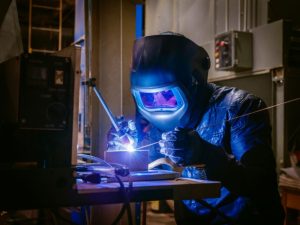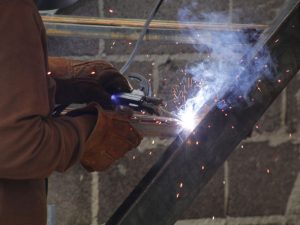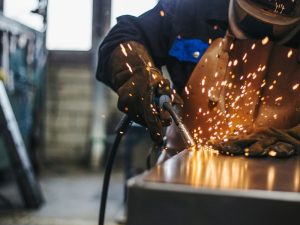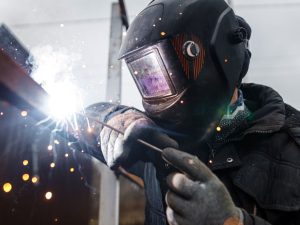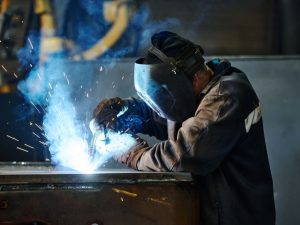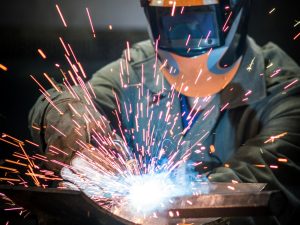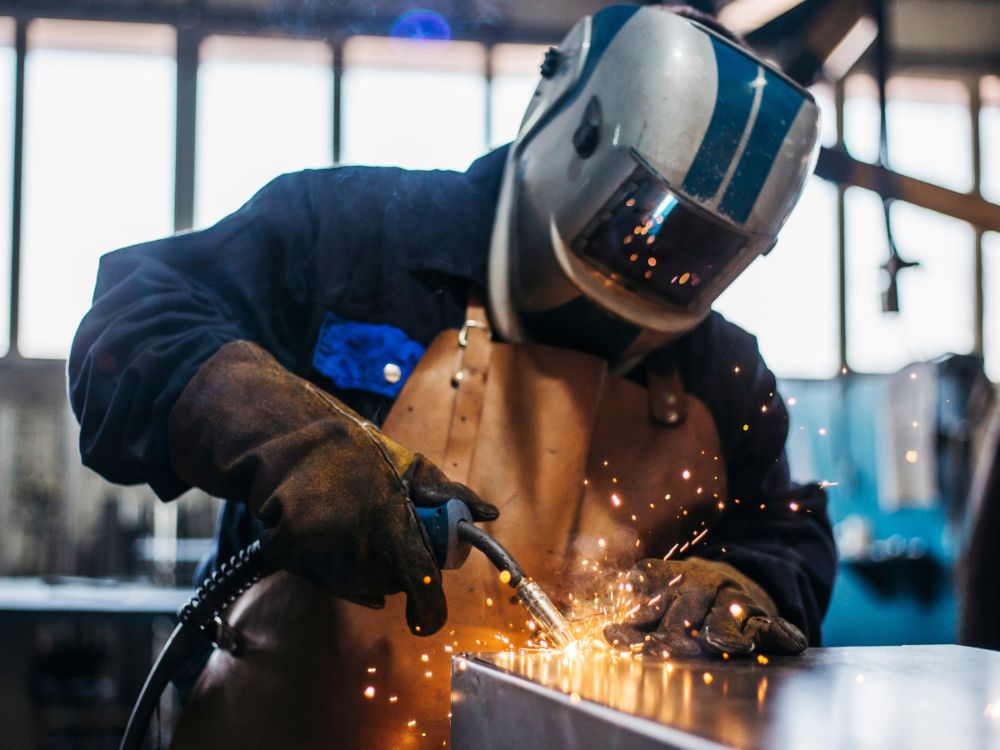
Fume control for maintenance and repair welding works when you plan it before the crew leaves the shop: the capture point, the hose or arm reach, and any confined-space steps. This guide is for maintenance leads and EHS managers whose welders move between bays, plants, and temporary jobs, where a fixed ventilation system never reaches the joint.
It covers what changes with each move, and a pre-job check that takes a few minutes. For the equipment side, see KEMPER’s fume extraction solutions for industrial maintenance, repair, and refurbishment.
What Makes Maintenance and Repair Welding Hard to Control?
The production station repeats. A repair job does not. On Monday the weld is on a pump base under a mezzanine. On Thursday, it is a conveyor frame that production needs back by the next shift. The metal, the coating, the position, and the people nearby all change with the job, and a new location often has no ventilation plan written for it.
Picture an extractor riding along on the truck while its hose stops two feet short of the joint, so the welder starts without it. A pre-job plan catches that before the arc starts.
What Should a Pre-Job Fume Control Check Include?
Five questions cover most repair jobs. Run through them at the job briefing, not at the machine.
- What is the metal, and what is on it? Check the safety data sheet or ask the equipment owner about paint and plating. OSHA names zinc oxide from galvanized steel as the usual cause of metal fume fever, and 29 CFR 1910.252(c) sets added requirements for materials such as lead and cadmium.
- Where will the plume go, and who is standing in it? Shutdown areas are crowded. OSHA’s fume fact sheet says to keep exhaust ports away from other workers.
- Can the capture point sit close to the arc? The same fact sheet says to keep hoods, extractor guns, and vacuum nozzles close to the plume source. Measure the reach from the unit to the joint before you park the unit.
- How does the unit get to the joint, and where does it plug in? A unit that cannot reach the outlet or the work stays on the truck.
- Is it a confined space? If yes, use the next section before anything else.
How Does Confined-Space Repair Welding Change the Plan?
A fume extractor controls welding fume at the source. It does not make a tank, vessel, or pit safe to enter. Because KEMPER sells extraction equipment, that distinction is worth stating plainly.
In the United States, OSHA’s permit-required confined space standard, 29 CFR 1910.146, sets the baseline. It calls for:
- Atmospheric testing before entry.
- An attendant stationed outside the space.
- An entry permit that lists any hot work permit issued for the space.
Continuous forced-air ventilation can serve as an alternate procedure only when atmospheric hazards are the sole hazard, and ventilation alone keeps the space safe.
Welding adds its own risk. OSHA’s fact sheet notes that inert shielding gases such as argon can displace oxygen, and CCOHS lists argon among the simple asphyxiants. Under 1910.252(c)(4), welders need airline respirators or hose masks when adequate ventilation is impossible.
In Canada, OSHA does not apply. CCOHS states that every federal, provincial, and territorial jurisdiction has its own confined space regulations, and it advises reviewing the ones that cover your workplace before building a program. Extraction is one layer inside the entry plan that your competent person writes.
Which Portable Extraction Fits Repair Crews?
Match the unit to how the crew works:
- Mobile filter units are designed to be moved as work locations change. The category runs from occasional to permanent use, depending on the model.
- High-vacuum extraction suits tight or detailed spots, with nozzle or torch-integrated setups that sit close to the joint.
If you run repair welding across several areas or sites, start with a short list: the three spots your welders visit most. Send that list to KEMPER and talk through which setup would reach each one.