
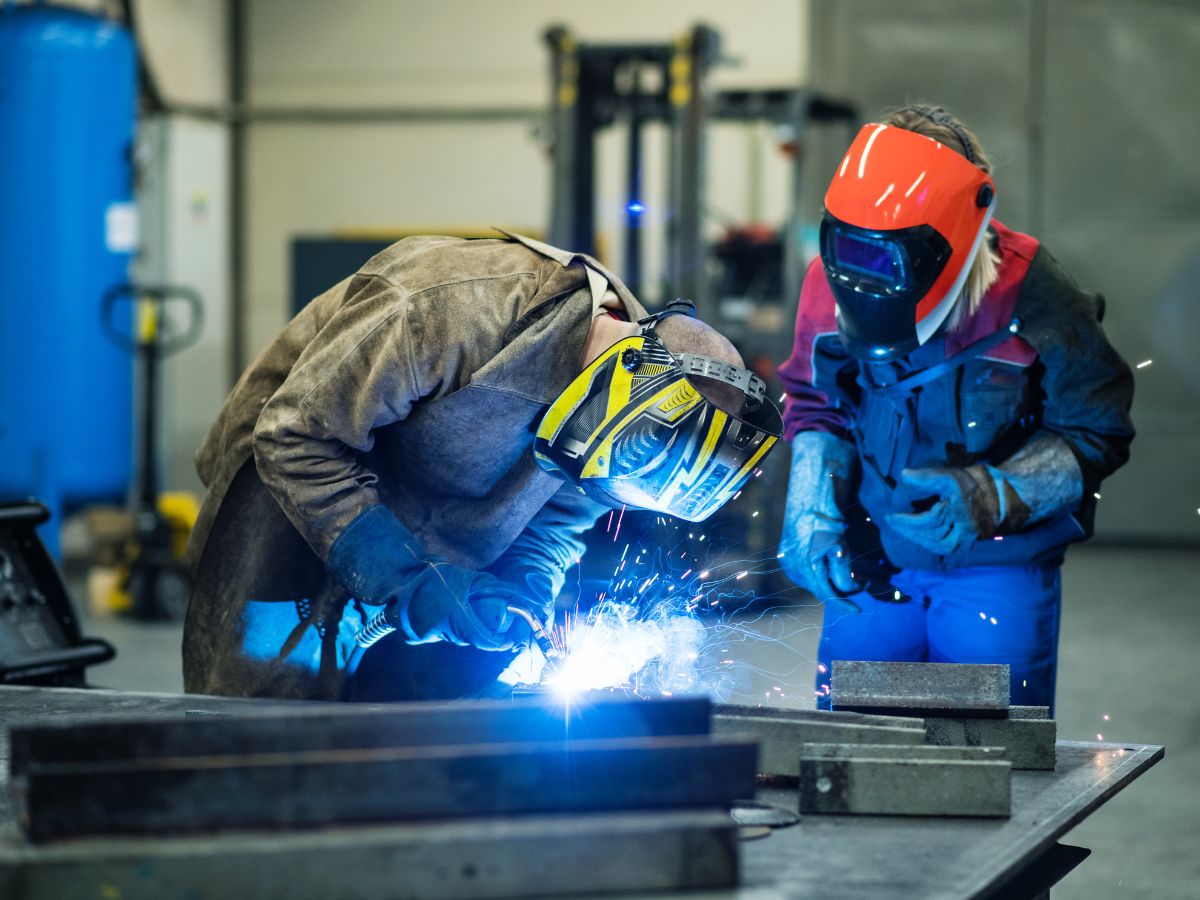
Welding is a critical process in manufacturing, fabrication, construction, maintenance, and repair. However, every welding operation produces welding fumes, which are tiny airborne particles and gases that can affect workplace air quality if not properly controlled.
Understanding what welding fumes are, why they matter, and how to manage them is essential for creating safer, healthier work environments.
What Are Welding Fumes?
Welding fumes are generated when metal is heated to extremely high temperatures during welding, cutting, or other thermal processes. As the metal vaporizes and cools, it forms microscopic particles that become suspended in the air.
The exact composition of welding fumes depends on factors such as:
- The welding process being used
- The base metal being welded
- Surface coatings or contaminants on the material
- Filler metals and consumables
Common processes that generate welding fumes include MIG welding, TIG welding, stick welding, flux-cored arc welding, and plasma cutting.
Because welding fume particles are extremely small, they can remain airborne long after a task is completed and may spread throughout a facility without proper ventilation or extraction.
Why Are Welding Fumes a Workplace Safety Concern?
Welding fumes can affect more than just the immediate work area. In facilities where multiple welding operations take place, airborne contaminants can accumulate and impact overall indoor air quality.
Common workplace challenges associated with welding fumes include:
- Reduced visibility in welding and fabrication areas
- Dust and particulate buildup on equipment
- Increased cleaning and maintenance requirements
- Poor indoor air quality across the facility
- Difficulty maintaining workplace air quality standards
- Increased exposure to airborne contaminants for employees
For these reasons, welding fume control is an important part of workplace safety programs and air quality management strategies.
How Are Welding Fumes Controlled?
The most effective approach is to capture welding fumes as close to the source as possible before they disperse into the surrounding environment. This is commonly referred to as source capture.
Depending on the facility layout and application, organizations may implement a combination of extraction and ventilation solutions, including:
- mobile filter units for flexible workstations and maintenance activities
- stationary extraction systems for dedicated welding stations
- central extraction systems for facilities with multiple work areas
- general ventilation systems to improve overall air quality throughout a workspace
The right solution depends on the size of the facility, the number of welding stations, production volume, and the specific contaminants being generated.
The Benefits of Effective Welding Fume Extraction
Investing in a welding fume extraction system can provide benefits beyond workplace safety. Effective welding air filtration and industrial ventilation systems can help:
- Improve indoor air quality
- Reduce airborne dust and smoke
- Support workplace safety initiatives
- Maintain cleaner production environments
- Improve visibility for workers
- Protect equipment from particulate buildup
- Support compliance with occupational health and safety requirements
By capturing fumes at the source and preventing contaminants from spreading throughout the facility, organizations can create healthier and more productive work environments.
Finding the Right Welding Fume Extraction Solution
Every welding environment is different. A small fabrication shop may require a portable welding fume extractor, while a large manufacturing facility may benefit from a centralized extraction system or facility-wide ventilation strategy.
KEMPER North America offers a full range of welding fume extraction solutions designed to improve workplace air quality across a variety of industries and applications.
Whether you’re evaluating a welding ventilation system for a single workstation or exploring industrial air filtration solutions for an entire facility, understanding the risks associated with welding fumes is the first step toward creating a safer workplace.